
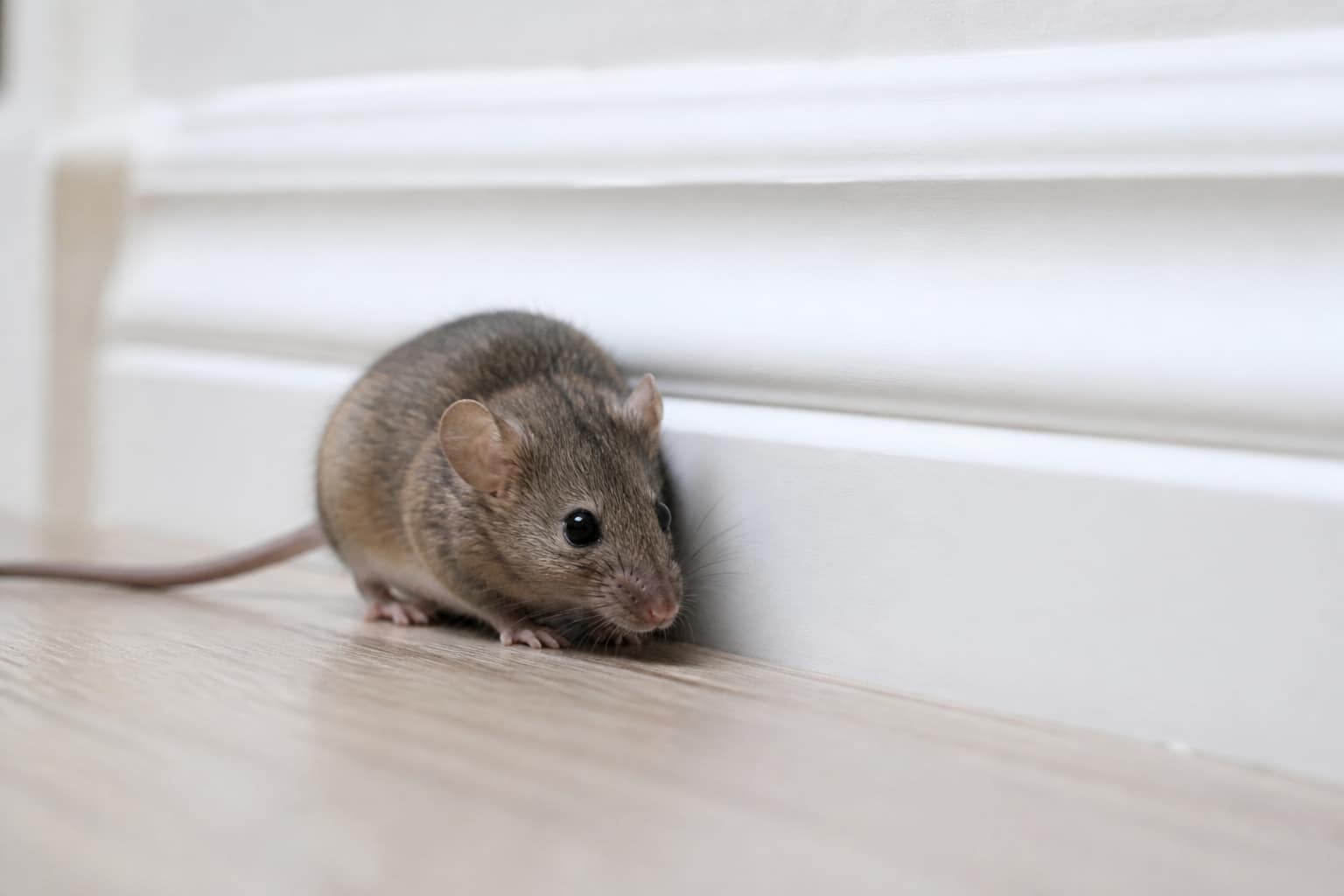
How can you tell if you have mice? Mice in a warm, well-stocked South Jersey home spread germs and filth — and they are clever enough to go months without being seen. When you finally spot “a” mouse, it usually represents only a fraction of activity in walls, attics, basements, and nesting areas.
What to look and listen for
- Listen: Scratching in cabinets, walls, or ceilings — often at night.
- Food stocks: Holes in dog food or bird seed bags, empty husks, Tupperware with chew holes, crumbled pantry goods.
- Droppings: Small dark rice-shaped pellets in drawers, cabinets, and feeding areas.
- Odors / urine: Stale smells in hidden spaces; urine trails can show under UV light.
Why it escalates fast
There are two kinds of homes: ones that have gotten rid of mice, and ones that still need to. Females can produce many litters per year; a small family can multiply dramatically in a few months. Our pet-conscious approach focuses on fast, effective removal plus exclusion.
Next: mice in your house — what to know · Burlington County rodent control · Call (609) 654-1808.
Frequently asked questions
What do mouse droppings look like?
They are typically small, dark, and rice-shaped, often found in drawers, pantries, and along baseboards.
When should I call a professional?
Call when you see droppings, hear nighttime scratching, find chewed packages, or spot even one mouse — especially in fall and winter.
If you’ve found these signs, see what to do when mice are in your house or learn about rodent control.
Request a free estimate (609) 654-1808
Related reading: what to do when mice are in your house. For service, see rodent control.